Doors
Entry and garage doors, measured before they are ordered
What a door replacement includes, how to measure the opening, which parts are not DIY, and what a bid should say.
By RoofElm Editorial Team Updated 6 min read
- Entry door types
- Prehung unit or slab only
- Garage door springs
- Pro job, not DIY
- Glass in a door
- Raises heat flow
- Rules to confirm
- Fire, wind and permit
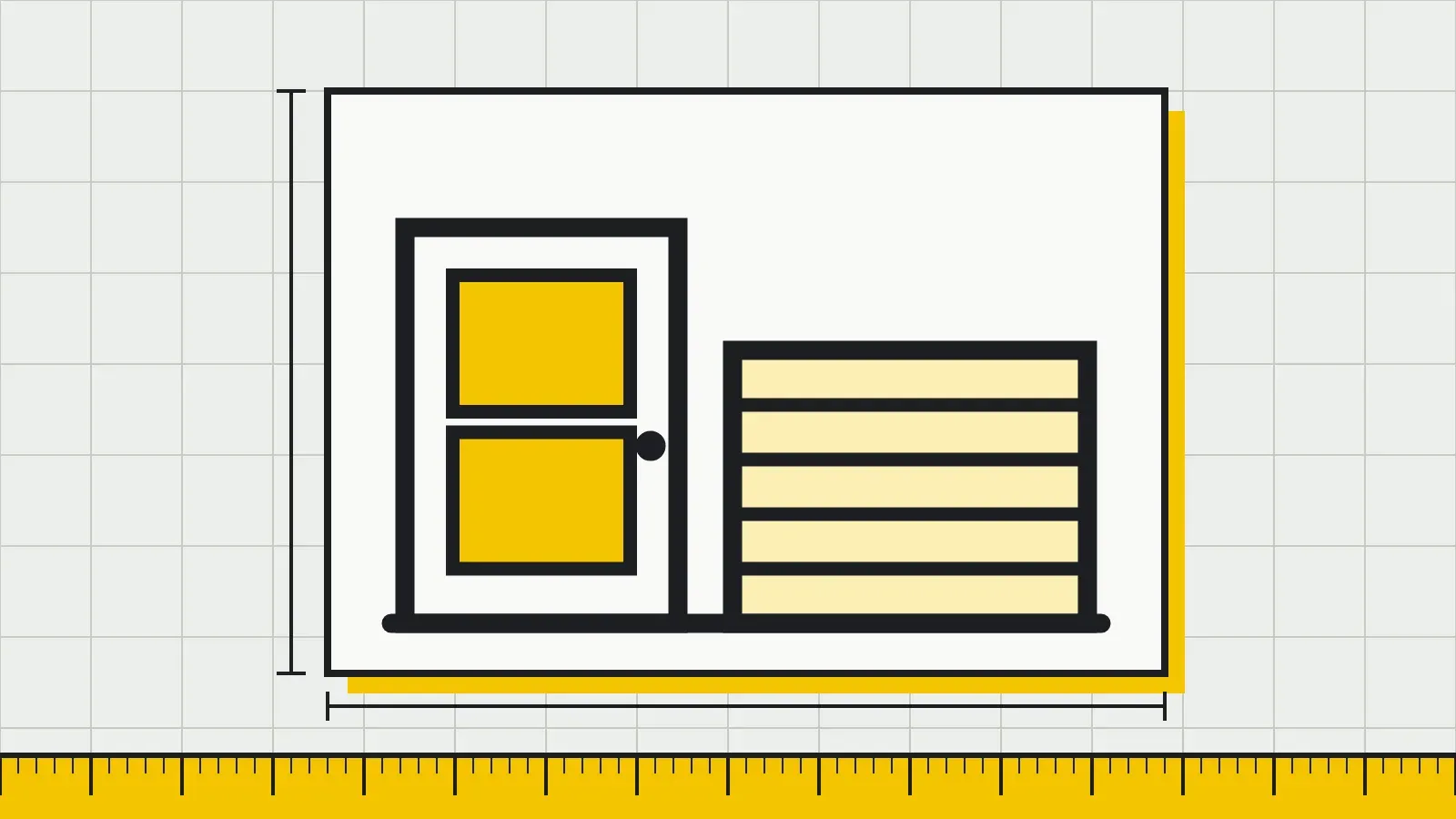
In short
An entry door usually comes prehung, meaning door, frame and threshold arrive as one unit, and a garage door is a set of sections on tracks, driven by springs that are dangerous to adjust. Measure the opening, the hinge side and the wall depth for an entry door, and the width, height, headroom and side room for a garage door. A door with glass loses more heat than a solid one, so read the rating label. Then see window replacement for how the same label numbers work.
What a door replacement includes
An entry door job is more than the slab you see. A prehung replacement removes the old door and its frame, checks the sill and the framing under it for rot, then sets a new frame level and plumb, flashes it, seals the edges and hangs the door. A slab-only swap keeps the old frame and puts a new door leaf on the old hinges, which works only when the frame is square and the sill is sound.
- Entry door: door leaf, frame, threshold, weatherstripping, lockset and deadbolt, and the trim and caulk.
- Garage door: the sections, the tracks, the torsion or extension springs, the cables, the weatherseals and, if you want one, a new opener.
- Side work: sidelites, transoms, storm doors and paint or stain.
Water is the usual reason a door fails early. The sill needs a pan or flashing under it, and the top of the frame needs a drip cap, so ask where each one goes before the crew starts.
Choosing the entry door
Steel, fiberglass and wood doors each trade off something different. Look at how a door is made rather than at the brochure: ask what the core is, what the frame is made of and how the threshold seals. Glass lets in light but raises heat flow. A window in a door has a U-factor, the same rating used for windows, and the label tells you how the whole door performs. ENERGY STAR also certifies doors, and the criteria differ by climate region and change over time, so read the current ones before you buy.
| Material | What to know | Ask about |
|---|---|---|
| Steel | Can dent, and can rust where the finish is scratched. | Core type and finish warranty |
| Fiberglass | Holds a stained or painted finish and resists swelling. | Skin thickness and frame material |
| Wood | Looks traditional and needs refinishing, especially on sun-facing doors. | Finish plan and overhang |
A porch roof or deep overhang protects any door, which matters as much as the material. A door that gets rained on and baked in the sun every day needs the finish redone sooner. Add weatherstripping and a threshold that closes tight against the leaf, and read the estimate reading guide so the bid lists each part.
Measuring the opening
- For a prehung entry door, measure the rough opening width and height at several points, and use the smallest. Check that the sill is level and the frame is plumb.
- Note the swing: stand outside and see which side the hinges are on, and whether the door swings in or out.
- Measure the wall depth from the outside face to the inside face, so the new jamb is the right width.
- For a garage door, measure the opening width and height, the headroom above the opening for the tracks and springs, and the side room on each side.
- Write the sizes in the order, ask the installer to confirm them, and ask who pays if a door is made to the wrong size.
The same arithmetic sizes the seals. A garage door seal runs up both sides and across the top, and the bottom has its own seal. For an example opening 16 feet wide and 7 feet high, that is 7 + 7 + 16 = 30 feet for the sides and top, plus 16 feet for the bottom, which makes 46 feet in all. These are example dimensions, not a standard. Use the width and height of your own opening, and ask the installer for the exact seal type.
Garage door safety: what is not DIY
A garage door is the largest moving part of a house. The springs hold the door's weight under tension, and a spring or cable that lets go can injure someone badly. Replacing or adjusting springs, cables and the lift hardware belongs to a trained technician. A homeowner can handle the seals, paint, lubrication of rollers and hinges as the maker directs, and the batteries in the remote.
- Opener safety: modern openers have photo-eye sensors near the floor and a reverse on contact. Test both after any work: wave an object through the sensor beam, and lay a board flat on the floor under the door to see it reverse.
- Balance: disconnect the opener and lift the door by hand. If it will not stay in the middle of its travel, call a technician.
- Door to the house: most building codes treat the door between an attached garage and the living space as a fire barrier. Ask your building office what that door must be before you swap it.
- High-wind areas: coastal and storm regions may require a wind-rated garage door or bracing. Check the label and your local rules.
Rules and permits differ by city. Swapping an entry door like for like often needs no permit, while a new opening, a larger garage door or a wind-zone requirement may. Read permits and inspections and call before work starts.
What drives the price and what to ask
Size and type
Double doors, sidelites, wide garage openings and custom sizes add material and labor.
Insulation and glass
An insulated garage door, glazed panels and a glazed entry door change both the rating and the cost.
Condition of the opening
A rotted sill, a bent track or a framing repair is found only after the old door is out.
- Ask for the brand, model, size, core and glass package of each door, and the rating label for entry doors.
- Ask whether the entry door bid includes sill flashing, drip cap, weatherstripping, a new threshold and paint or stain.
- For a garage door, ask what the insulation rating refers to, the section or the whole door, and whether springs, cables and hardware are replaced or reused.
- Ask who pulls any permit, who hauls away the old door, and what happens if rot is found.
- Get the manufacturer's warranty and the installer's labor warranty in writing. Contracts, warranties and lien waivers explains why.
A prehung entry door in a sound opening is a project some handy owners take on, using weatherstripping and sealants as directed in the instructions. A crooked frame, a rotted sill or a garage door spring is crew work. Before you count on energy savings, put your quote into the improvement payback calculator.
Common questions
Should I replace the door or just the weatherstripping?
If the door is sound and the leak is at the edges, new weatherstripping and a threshold adjustment may be enough. Replace the door when it is warped, rotted, damaged or cannot be sealed.
Can I replace garage door springs myself?
No. The springs are under high tension and can injure you. Hire a trained garage door technician and ask for the work in writing.
Does an insulated garage door matter?
It can, if the garage shares a wall or ceiling with living space. Ask what the insulation rating refers to and read the label, because makers measure it in different ways.
Do I need a permit to replace an entry door?
Often not for a like-for-like swap, but a new or larger opening and some wind or fire rules do need one. Call your building office before work starts.
Sources
- U.S. Department of Energy: Doors
- U.S. Department of Energy: Install weatherstripping on an exterior door
- ENERGY STAR: Residential windows, doors and skylights
- ENERGY STAR: Residential windows, doors and skylights, Version 7.0 specification
- National Fenestration Rating Council: The energy performance label
Reference list checked on November 19, 2026 for relevance. This article gives no ENERGY STAR thresholds, code section numbers or prices on purpose: they change, so read the current specification and ask your building office before you buy.
Next on the job
-
Project
Window replacement
Insert or full-frame, U-factor and SHGC on the label, measuring, and what a bid must say.
-

Guide
Permits and inspections
When a job needs a permit, who pulls it, what inspectors check and what skipping one can cost.
-

Guide
Read a contractor estimate
Scope, named materials, allowances and exclusions: what every home improvement bid should say.