Windows
Window replacement, read off the label first
Insert or full-frame, what U-factor and SHGC mean, and what a bid has to say before you order custom windows.
By RoofElm Editorial Team Updated 6 min read
- U-factor
- Lower means less heat flow
- SHGC
- Lower blocks more sun
- Where ratings live
- The NFRC label
- Two job types
- Insert or full-frame
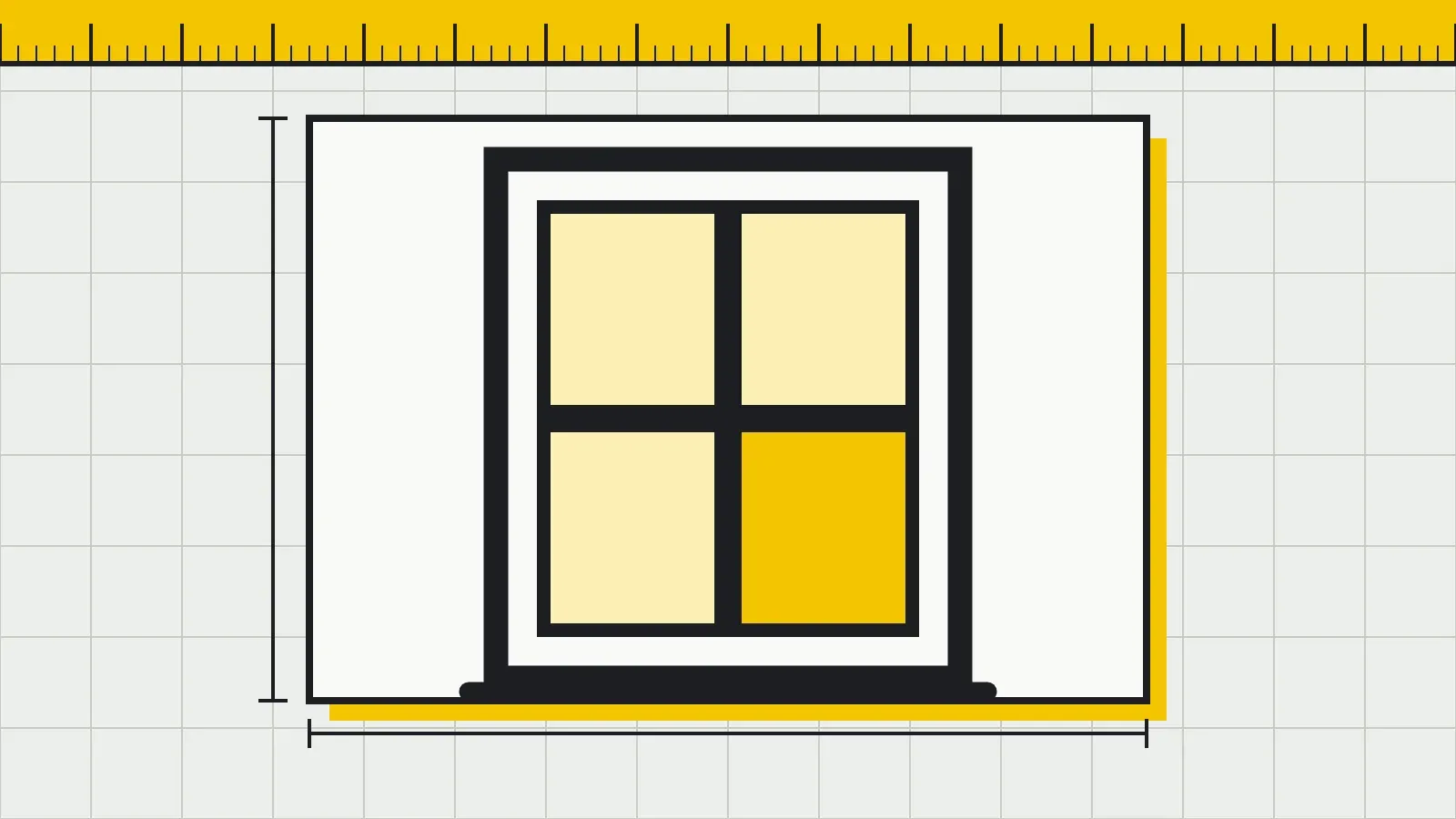
In short
A window replacement is either an insert that slides a new unit into the old frame, or a full-frame job that opens the wall around the window. The label tells you how the window performs: U-factor is heat flow (lower is better insulation) and SHGC is how much sun heat gets through (lower blocks more). Windows are made to your measurements, so the size in the order matters as much as the price. Before you spend on energy savings alone, run the quote through the improvement payback calculator.
What a window replacement includes
A window replacement swaps the old window for a new one in the same wall opening. A bid should say which of two methods it uses. An insert, also called a pocket replacement, leaves the existing frame, trim and siding in place and slides a new unit into the frame. A full-frame replacement removes the whole window down to the rough opening, the framed hole in the wall, so the crew can inspect, flash and seal it.
- Insert replacement: less mess inside, but the glass area shrinks a little, and rot hidden in the old frame stays hidden.
- Full-frame replacement: more labor, but it is the right call when the frame is soft, the wall is leaking, or you want to change the window size.
- Sash kits and storm windows: a narrower fix for old wood windows whose frames are still sound.
Neither method repairs a leak that starts in the siding or at failed wall flashing. If water is getting in around a window, ask the contractor to find where it comes from before you buy glass. If the siding is also due, read siding replacement, because windows and siding share the same flashing details.
Reading the label: U-factor and SHGC
Rated windows carry a label from the National Fenestration Rating Council (NFRC), an independent rating body. Two numbers matter most for energy.
- U-factor is how fast heat flows through the whole window, frame and glass, in Btu per hour per square foot per degree Fahrenheit. Lower insulates better.
- SHGC, the solar heat gain coefficient, is the share of the sun's heat that gets through, on a scale from 0 to 1. Lower blocks more sun; higher lets more in.
- Visible transmittance is how much daylight passes through. Higher is brighter.
- Air leakage rates how much air gets through the closed window. Lower is tighter.
To compare two windows, use this formula: heat loss in Btu per hour = U-factor × window area in square feet × temperature difference in degrees. The numbers below are made up to show the arithmetic. They are not ratings of any product.
| Window | Math | Heat loss |
|---|---|---|
| A, U-factor 0.50 | 0.50 × 15 × 40 | 300 Btu per hour |
| B, U-factor 0.30 | 0.30 × 15 × 40 | 180 Btu per hour |
| Difference | 300 − 180 | 120 Btu per hour |
Ten windows like these would differ by 1,200 Btu per hour on that night. Compare that with what an attic or air-sealing job would do before you decide the order of projects. What to fix first walks through the ranking.
ENERGY STAR criteria and your climate
ENERGY STAR certifies windows against criteria that differ by climate region, so a model that qualifies in one part of the country may not qualify in another, and the criteria are revised from time to time. We do not print the current thresholds here. Look up your region on the ENERGY STAR site, then ask the dealer to show the NFRC label and the ENERGY STAR listing for that exact model.
As a general direction, a cold-climate house cares most about a low U-factor, and a hot-climate house cares most about a low SHGC to keep the sun's heat out. Big south-facing windows in a cold climate may be worth some solar gain in winter. Shade from trees and roof overhangs changes the answer, so judge each wall rather than the whole house.
Measuring and ordering
- Measure the opening width in three places: top, middle and bottom. Write down the smallest.
- Measure the height in three places: left, center and right. Write down the smallest.
- Measure both diagonals. If they differ, the opening is out of square and the installer has to shim for it.
- Note which windows are in bedrooms, near doors, near tubs or at the bottom of stairs, because code rules on escape openings and safety glass apply there.
- Ask the installer to measure too, and put the final sizes in the order. Ask who pays if a custom unit is made to the wrong size.
Windows are made to order, and lead times can be long. Ask for the lead time in writing, and ask how long each opening will be open when the old window comes out.
Safety, lead paint and permits
If the house was built before 1978, the old paint may contain lead. Federal rules from the EPA cover paid renovation work in older homes, and firms that disturb painted surfaces must be certified and follow lead-safe work practices. Ask to see the firm's EPA Lead-Safe certification, and do not dry-scrape or sand old window paint yourself.
Building codes add rules the label does not show. Bedroom windows must work as an emergency exit, and glass near doors, tubs and stairs often has to be safety glass. A permit may be required, especially when the opening changes size. Your building office has the last word: see permits and inspections.
What drives the price and what to ask
Method
A full-frame job takes more labor than an insert and may add trim, siding and drywall repair.
Glass and frame
Layers of glass, coatings, gas fill and frame material change the rating and the price.
Count and access
Upper floors, large units and tight lots call for ladders or scaffolding.
- Ask each bidder to list the brand, product line, U-factor, SHGC and NFRC label for every window, with the size in the order.
- Ask whether the bid is insert or full-frame, and what is done about the wall flashing and the gap around the frame.
- Ask who pulls the permit, who hauls the old windows away, and, for a pre-1978 house, who holds the lead-safe certification.
- Get the manufacturer's warranty and the installer's workmanship warranty separately, with the years and what each covers. Contracts, warranties and lien waivers explains the difference.
- Compare bids line by line with the estimate reading guide.
A first-floor insert in a sound frame is a job some experienced do-it-yourselfers take on, if the paint is not a lead risk. Upper-floor windows, full-frame jobs, large units and anything with rot are crew work. A window that is flashed and sealed badly leaks inside the wall, where you cannot see it. If the walls are open anyway, see insulating exterior walls.
Common questions
Insert or full-frame: which should I choose?
Choose an insert when the existing frame is square, dry and solid. Choose full-frame when the frame is soft, water has gotten into the wall, or you want a different size. Ask the contractor to explain what they see in your frames.
What U-factor do I need?
It depends on your climate, and the ENERGY STAR criteria are set by region and revised over time. Read the current criteria for your region and ask the dealer to show the NFRC label for the exact model.
Will new windows pay for themselves in energy savings?
It depends on your old windows, your climate, your energy prices and the quote. Enter your own numbers in the improvement payback calculator instead of relying on a general claim.
Do I need a permit to replace windows?
Often yes, especially when the opening size changes. Call your city or county building office before work starts.
Sources
- ENERGY STAR: Residential windows, doors and skylights
- ENERGY STAR: Residential windows, doors and skylights, Version 7.0 specification
- National Fenestration Rating Council: The energy performance label
- U.S. Department of Energy: Guide to energy-efficient windows
- ENERGY STAR: High performing windows or storm windows
- EPA: Lead Renovation, Repair and Painting Program
Reference list checked on November 19, 2026 for relevance. This article gives no ENERGY STAR thresholds, code section numbers or prices on purpose: they change, so read the current specification and ask your building office before you buy.
Next on the job
-
Project
Entry and garage doors
Prehung or slab, measuring the opening, seals, garage door springs and what a bid should say.
-
Project
Insulating exterior walls
Dense-pack from inside or outside, sheathing at re-siding, plus moisture and lead-safe checks.
-

Guide
Read a contractor estimate
Scope, named materials, allowances and exclusions: what every home improvement bid should say.